Mold Remediation
Containment, material assessment, controlled removal, and cleaning for areas affected by mold growth and excess moisture.
Serving Albuquerque, New Mexico & surrounding areas
24/7 Emergency Response
Fast help for leaks, overflows, and indoor flooding. Get a clear damage assessment, focused water removal, and structural drying based on moisture readings.
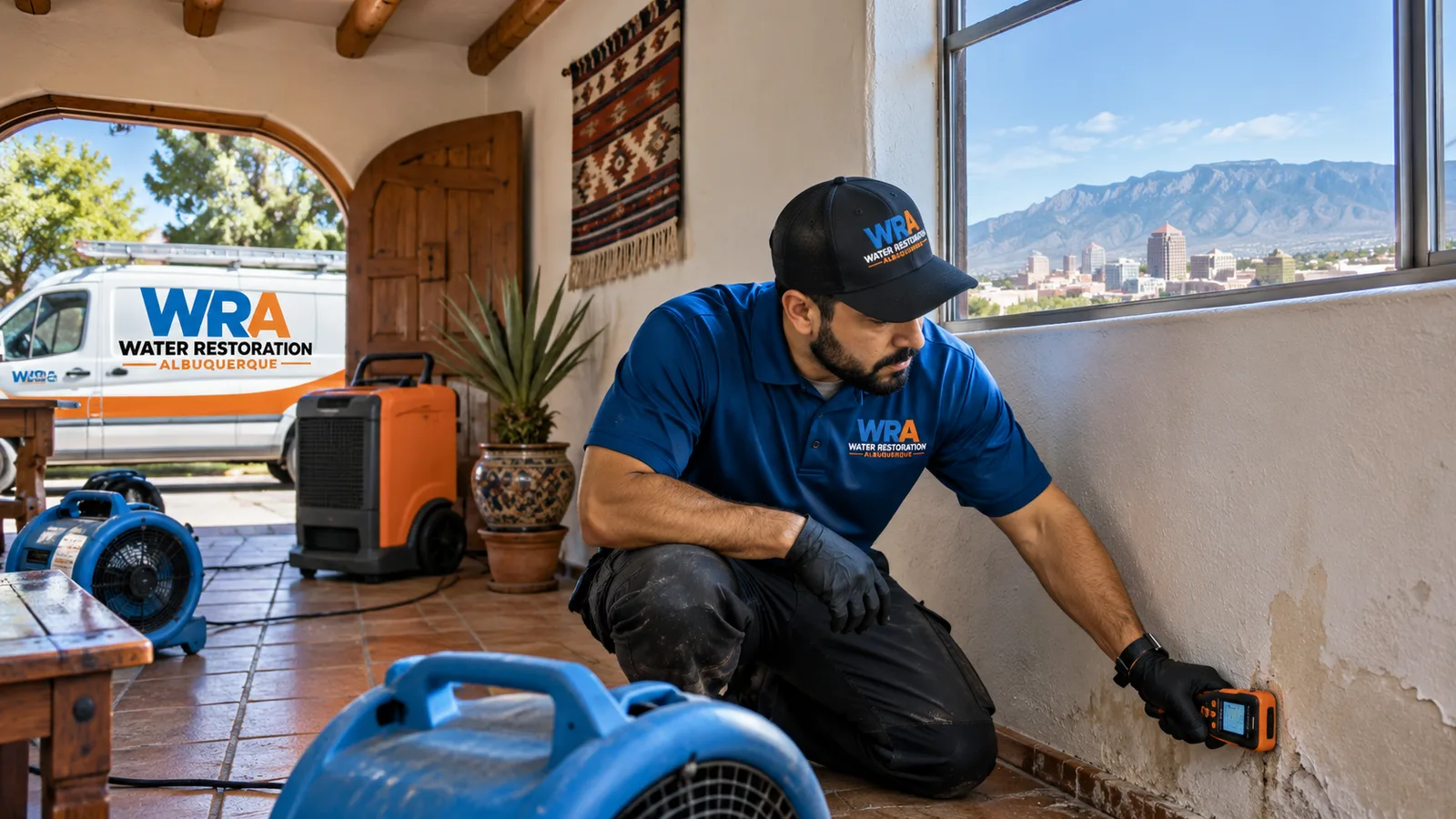
Water restoration Albuquerque property owners need starts with finding the affected materials, controlling the source when accessible, and removing standing water. The next priority is drying what can be saved before moisture spreads farther through drywall, insulation, flooring, or framing.
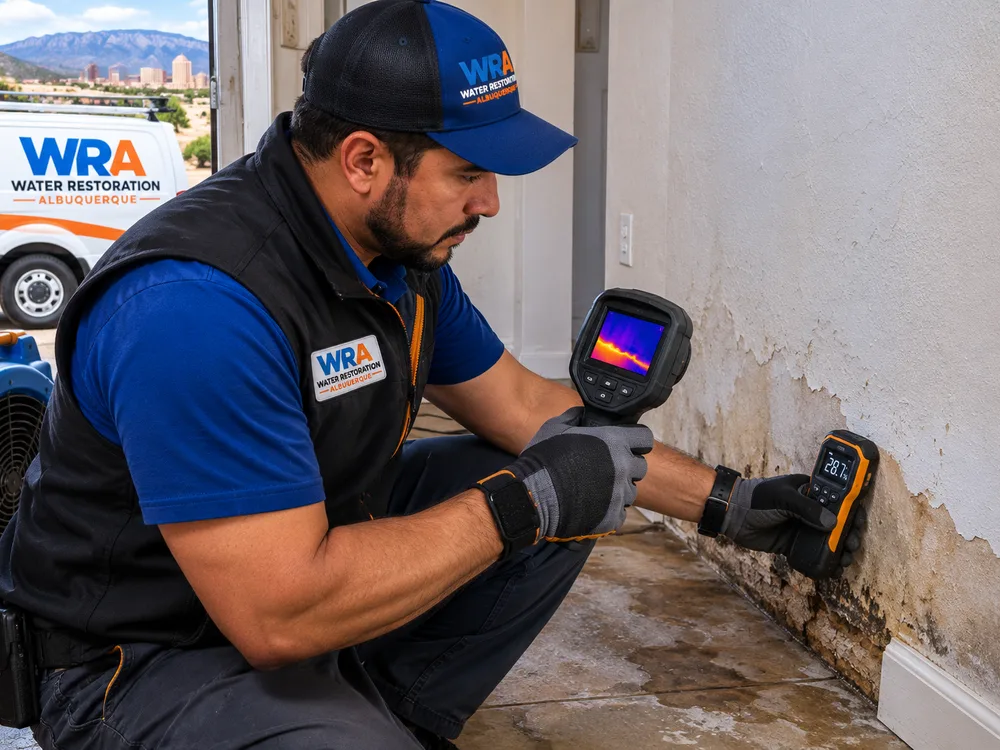
Water Restoration Albuquerque evaluates visible damage and checks beyond the surface with moisture-detection tools. The work plan may include extraction, removal of unsalvageable material, air movement, dehumidification, cleaning, and repeated moisture readings. Because Albuquerque has a dry climate, exposed surfaces may appear dry while moisture remains trapped beneath flooring or inside wall cavities. Verification matters more than appearance.
Prompt action can limit secondary damage and create a documented path toward repairs. Whether the cause is a plumbing leak, appliance failure, roof intrusion, or overflow, the response should match the water source, affected materials, and extent of migration.
Containment, material assessment, controlled removal, and cleaning for areas affected by mold growth and excess moisture.
Professional removal of visible mold from affected building materials, with attention to containment, cleaning, and the moisture condition behind the growth.
Emergency response for water-damaged rooms, including extraction, moisture mapping, structural drying, and cleanup after leaks, overflows, or flooding.
Local help for residential and commercial water damage, with drying plans based on the source, affected materials, and moisture readings.
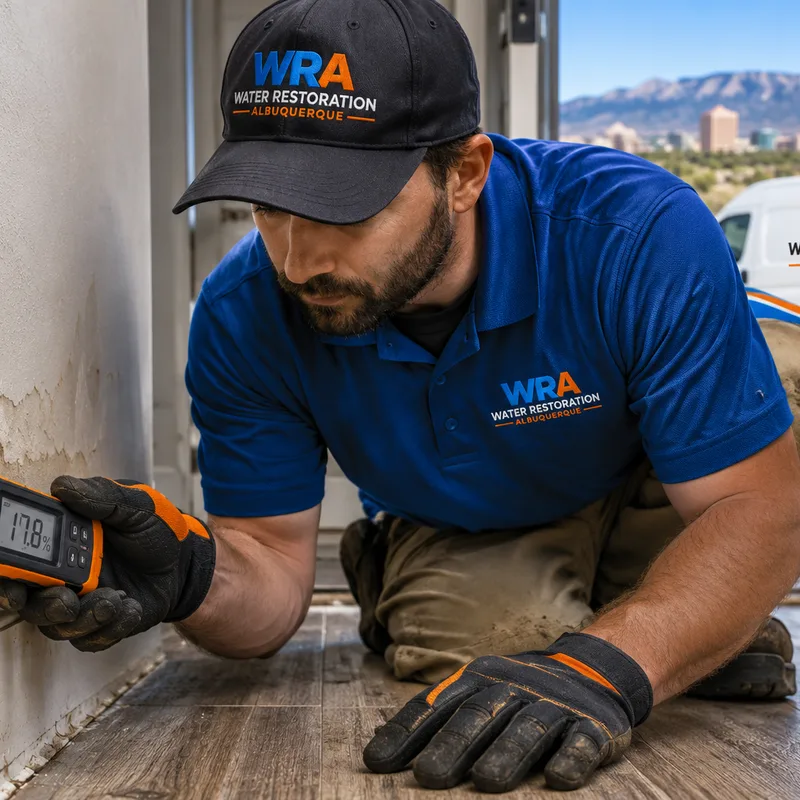
Meters help identify water in drywall, subflooring, trim, and other porous materials. Mapping the affected area supports a drying plan based on measured conditions rather than surface appearance alone.
Standing water and recoverable moisture are removed as early as practical. Extraction reduces the amount of water that air movers and dehumidifiers must handle during structural drying.
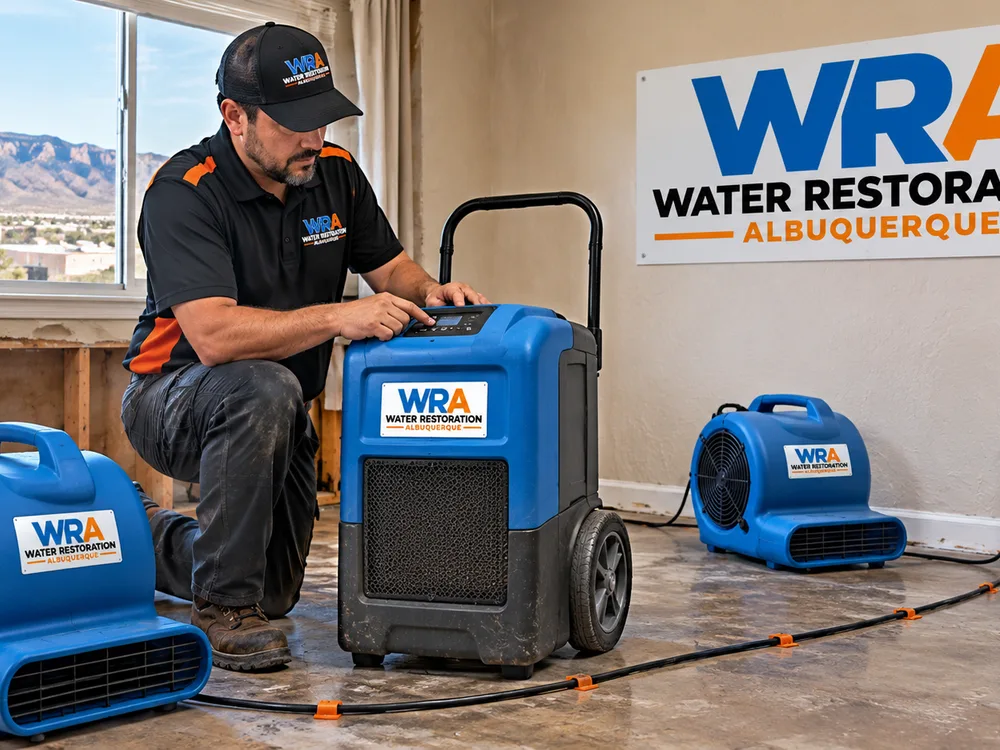
Air movers promote evaporation while dehumidifiers collect moisture from the air. Equipment placement and operating conditions should reflect the room layout, material types, and measured moisture levels.
Some materials can be dried and cleaned, while others may require removal because of contamination, swelling, delamination, or loss of structural integrity. The assessment guides that decision.
Follow-up readings show whether affected materials are responding to the drying plan. Equipment can then be adjusted as conditions change, with completion based on documented moisture levels.
Property owners need to understand the affected areas, recommended work, and likely repair needs. A clear scope helps organize decisions before removal, drying, cleaning, or reconstruction begins.
Water Restoration Albuquerque provides water restoration services in Albuquerque, New Mexico.
The company helps property owners respond to indoor water damage with assessment, cleanup, and structural drying. Each job begins with the source and extent of the loss. Clean water from a supply line requires different handling than water from an appliance discharge, drain backup, or exterior intrusion.
Albuquerque's low humidity can speed evaporation at exposed surfaces, but it does not prove that concealed assemblies are dry. Moisture readings help identify where water traveled and whether materials are returning to an appropriate dry condition. That practical approach gives owners a clearer basis for deciding what can remain, what needs removal, and what repairs may follow.
Water restoration in Albuquerque typically costs about $1,200 to $5,000 for a contained residential loss. Minor extraction and drying may run $500 to $1,500, while multiroom damage or extensive material removal can reach $5,000 to $15,000 or more.
Final pricing depends on the water source, affected square footage, contamination category, materials involved, access, equipment needs, drying time, and demolition or cleaning required. Repair work may be priced separately from mitigation. The exact cost is confirmed after the property inspection and moisture assessment.
A measured process follows the water from its source through extraction, drying, monitoring, and final verification.
The initial inspection identifies the apparent source, visible damage, safety concerns, and likely moisture migration. Moisture readings help define the affected area and guide the scope.
Standing water is extracted where needed. Materials that cannot be safely cleaned or effectively dried may be removed to expose wet cavities and support the drying process.
Air movers and dehumidifiers are placed according to the affected spaces and materials. The goal is controlled evaporation and moisture collection without spreading contamination.
Readings are taken during drying to track progress. Equipment placement or operating conditions may be changed when measurements show uneven drying or concealed moisture.
Affected surfaces are cleaned as appropriate, and final readings are reviewed before drying equipment is removed. Remaining repair needs can then be defined.
The sooner wet materials are assessed, the sooner a focused extraction and drying plan can begin.
Call for Emergency HelpWater Restoration Albuquerque works throughout Albuquerque, including established neighborhoods with varied building ages, roof types, plumbing layouts, and flooring assemblies.
Older houses and mixed-use properties can have layered flooring, plaster, and concealed wall cavities that require careful moisture mapping after a leak.
Properties with varied home ages, additions, and larger lots may have complex plumbing routes and multiple material assemblies affected by water movement.
Stucco homes and sloped lots can require close inspection where roof leaks, plumbing failures, or exterior drainage send moisture into concealed assemblies.
Hillside properties and varied elevations make roof drainage, exterior water entry, and moisture movement through lower building areas important inspection points.
Older homes, apartments, and commercial buildings may contain layered finishes and shared building systems that complicate access, drying, and damage assessment.
Newer homes commonly use drywall, engineered wood products, and modern flooring systems that can hold concealed moisture after supply-line or appliance leaks.
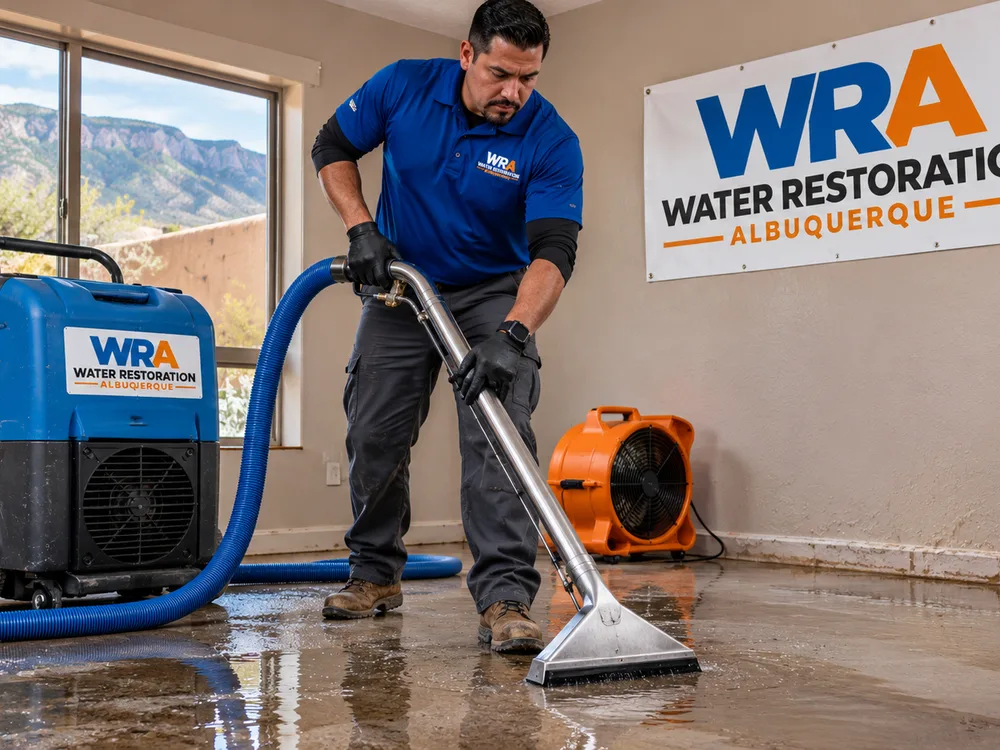
Response timing depends on current availability and the property's condition. Active leaks should be stopped when it is safe to do so, and standing water should be assessed promptly because it can migrate beneath flooring and into wall cavities.
The service covers common indoor water losses such as plumbing leaks, appliance failures, overflows, roof intrusion, and flooding within a building. The work plan depends on the source, contamination level, affected materials, and extent of moisture movement.
Some wet materials can be dried, while others need removal. The decision depends on water category, exposure time, swelling, delamination, microbial growth, and whether air can reach the wet assembly effectively.
Moisture readings are used to locate affected materials and track drying progress. They are especially useful in Albuquerque because exposed surfaces may dry faster than subflooring, insulation, framing, or enclosed wall cavities.
The immediate scope focuses on assessment, water removal, damaged-material handling, cleaning, and structural drying. Any repair needs should be identified after mitigation so the property owner has a clear picture of the next phase.
Service is available across Albuquerque, including Nob Hill, the North Valley, Taylor Ranch, Four Hills, Downtown, and Ventana Ranch. Property type and building access are considered when planning equipment placement and drying work.
Provide a brief description of the water source, when it was discovered, and which rooms appear affected. Photos and details about standing water, flooring, or visible ceiling and wall damage can help prepare for the visit.
Describe what happened and where the damage appears. Water Restoration Albuquerque can assess the affected materials and outline the appropriate extraction, drying, and cleanup steps.